
Service · Hillsdale, MI
Tankless Water Heater in Hillsdale, MI
Same rebate as a tank. Not the same demand on your propane.
In Hillsdale, MI and across the county: the same $250 rebate as a storage tank, and one supply-side check that only matters on a tank-fed house.
More than one home in three in Hillsdale County, Michigan runs on propane. A tankless unit draws a much higher input while running than a storage heater, which makes the tank and regulator a question rather than an assumption.
Request service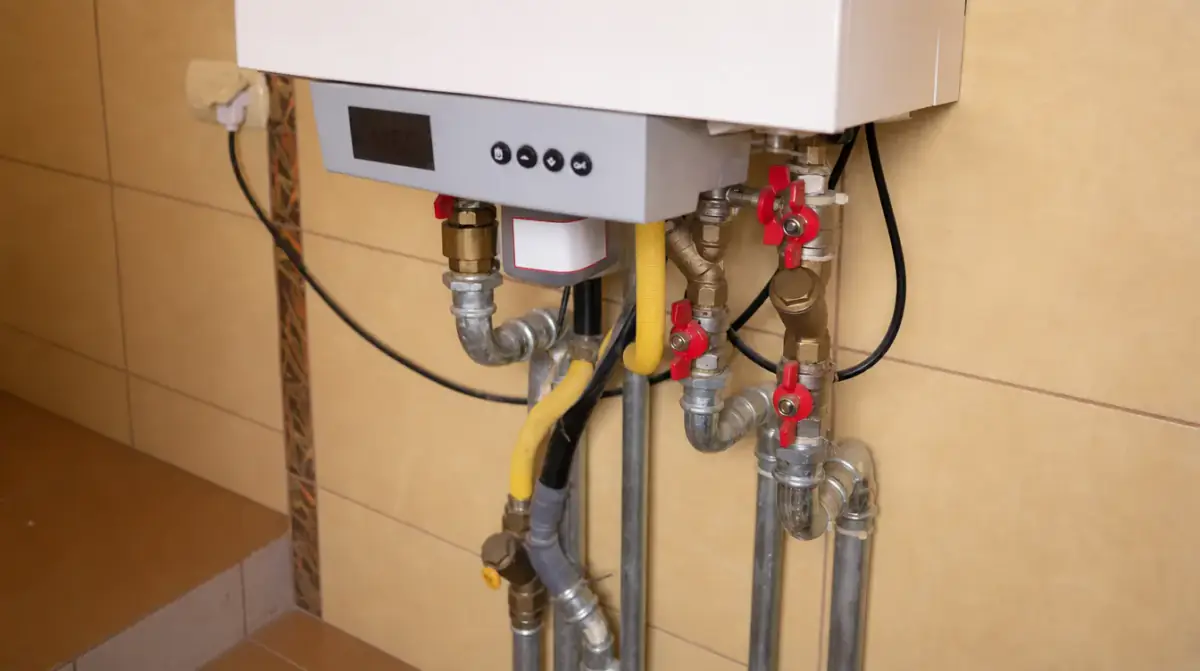
- $250 MiPropane per unit — tankless qualifies on the same terms as storage Michigan Propane Commission
- 36.2% of county homes are tank-fed, which is why the supply check matters here US Census ACS B25040
- ~25% of Michigan residents on a private well — scale is the tankless issue Michigan EGLE
How a Tankless Water Heater Works
A storage water heater keeps forty or fifty gallons hot around the clock and refills as you draw it down. A tankless unit heats water only while a tap is open, so it never runs out and never stands there keeping a tank warm overnight. That is the whole trade: no standby loss, no reservoir.
What that changes in practice
- Flow rate replaces tank size. The question is no longer how many gallons you store but how many you can heat at once. Two showers and a dishwasher is a sizing question, not a capacity one.
- Temperature rise matters. The colder the incoming water, the less flow a given unit can deliver — which is why a unit sized for a mild climate underperforms in a cold one.
- Venting is different and usually cannot reuse the old flue.
- Gas supply is often the constraint. A tankless unit draws far more than the storage heater it replaces while it is firing, so the gas line and, on a tank-fed house, the regulator have to carry it.
- It needs descaling on a schedule. Skipping that is what shortens their life.
When it is the wrong answer
If the gas supply cannot be upgraded economically, or the household draw is small and steady, a well-sized storage heater is often the better buy. Tankless is a good fit for a specific problem, not a universal upgrade.
The $250 MiPropane Rebate
Tankless water heaters are on the MiPropane eligible list alongside storage water heaters, ENERGY STAR propane furnaces of at least 40,000 BTU, and boilers. $250 per unit, on these conditions:
- Michigan resident, Michigan-licensed installer.
- New ENERGY STAR equipment.
- Replacing electric or fuel oil equipment, or new construction.
- Not paired with a heat pump.
- Installed 1 January – 31 December 2026; application in by 31 December 2026.
Because it is per unit, a tankless heater installed in the same job as a propane furnace is two claims. See water heaters for the storage comparison and oil to propane conversion if the old system was oil.
No utility rebate applies to a propane household — a dealer is not a regulated utility. And nothing federal: 25C covers only property placed in service before 31 December 2025, per the IRS.
The Check That Only Matters on a Tank-Fed House
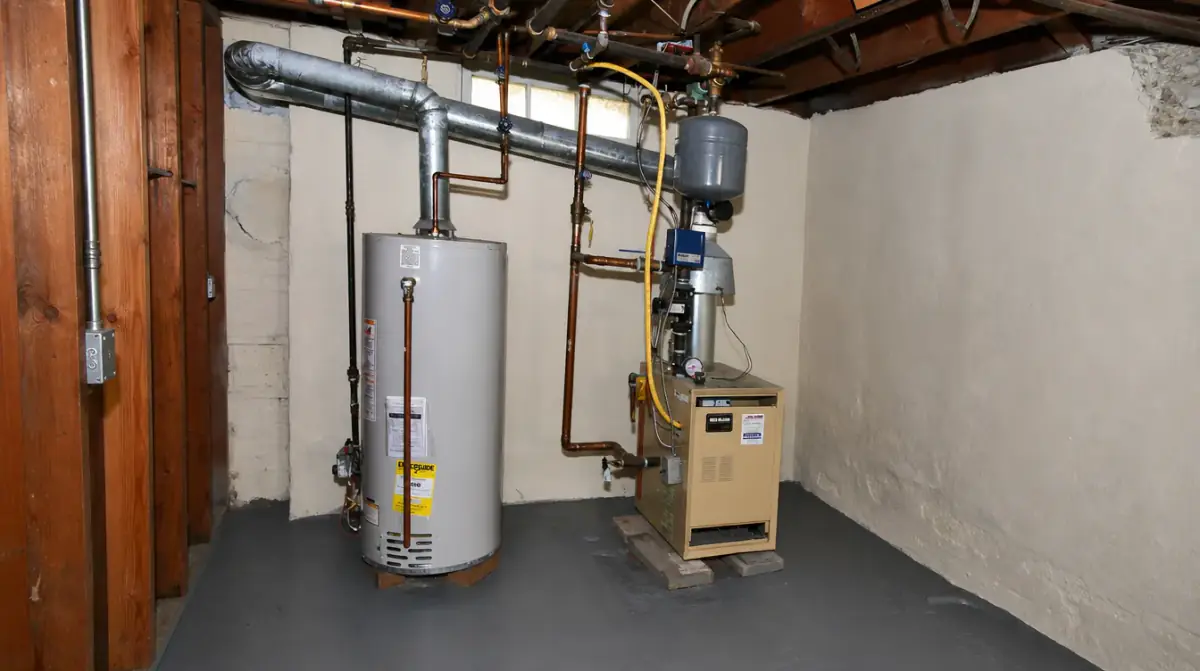
A tankless unit fires far harder than the storage heater it replaces, which makes the fuel supply the first thing to verify rather than the last. On a metered natural gas house that usually means checking the gas line size. On a tank-fed house it means the regulator and the tank as well — and here that is the more common situation.
A tankless unit draws far more while it runs
A storage heater maintains a reservoir and sips fuel to keep it warm. A tankless unit heats water on demand, which means a much higher input for the period it is running. On a metered natural gas main that is rarely a constraint. On a propane tank with a regulator and a piping run sized for the old appliance, it can be.
Have the tank size, the regulator and the gas line checked against the unit's rated input before ordering. It is a straightforward check, and it is much cheaper than discovering the answer afterwards.
Well Water and Scale
Scale is the main enemy of a tankless heat exchanger, and hard water accelerates it. That turns descaling from an optional extra into a maintenance requirement, and it makes water treatment worth pricing alongside the unit rather than after it.
Scale matters more on a tankless unit than on a storage tank because the heat exchanger passages are narrow, so mineral deposition affects performance sooner. If you are on a well, ask about the descaling interval the manufacturer expects and whether water treatment is worth doing before installation rather than after the first drop in performance.
Tankless water heaters by Town
We cover tankless water heaters in every town and township in the county.
- Tankless water heaters in Hillsdale, MI 49242
- Tankless water heaters in Jonesville, MI 49250
- Tankless water heaters in Litchfield, MI 49252
- Tankless water heaters in Reading, MI 49274
- Tankless water heaters in Pittsford, MI 49271
- Tankless water heaters in Waldron, MI 49288
- Tankless water heaters in Camden, MI 49232
- Tankless water heaters in North Adams, MI 49262
- Tankless water heaters in Allen, MI 49227
- Tankless water heaters in Jerome, MI 49249
- Tankless water heaters in Osseo, MI 49266
Tankless Water Heater FAQ
Does MiPropane cover a tankless water heater?
Yes. The Michigan Propane Commission pays $250 per unit toward ENERGY STAR propane tankless water heaters, on the same terms as storage units, furnaces and boilers: Michigan resident, Michigan-licensed installer, new ENERGY STAR equipment, replacing electric or fuel oil equipment or new construction, and not paired with a heat pump. Installations between 1 January and 31 December 2026, applications due 31 December 2026.
Will a tankless unit work on my existing propane tank?
That is the question to settle before ordering, and it is specific to tank-fed houses. A tankless unit draws a much higher input while it is running than a storage heater does, because it is heating water on demand rather than maintaining a reservoir. Whether your tank size, regulator and piping can deliver that is a real check rather than a formality — and in this county, where 36.2 percent of homes run on bottled, tank or LP gas against 8.6 percent statewide, it is a check that comes up far more often than it does elsewhere in Michigan.
Does hard well water cause problems with tankless heaters?
Scale is the usual issue, and it matters more on a tankless unit than a storage one because the heat exchanger passages are narrow. About 25 percent of Michigan residents are on a private residential well, per EGLE, and no county-level figure is published for Hillsdale County — but Hillsdale BPU supplies water to only about 4,000 homes and businesses inside the city against 21,490 housing units countywide. If you are on a well, ask specifically about descaling intervals and whether treatment is recommended before, not after, installation.
Is tankless worth it over a storage tank?
The rebate is identical at $250 per unit, so the decision rests on how each one fails to keep up. A storage tank runs out and then needs time to recover; a tankless unit never runs out but cannot exceed its flow rate, so two simultaneous demands can outstrip it. There is no single right answer, and we are not going to publish a cost comparison because we have no sourced price figure for either — unlike furnaces, where we do have a statewide range and label it as such.
Ask About a Tankless Water Heater
Tell us the fuel, your propane tank size if you have one, and whether you are on a well. Those three settle whether tankless is straightforward here or needs work first.
There is no phone number published on this site yet, so requests come in through this form — we reply by email or call you back on the number you give. That is also why the phone field is required rather than optional.
Where these numbers come from
MiPropane eligible equipment, the per-unit basis and all conditions: Michigan Propane Commission via the Michigan Department of Agriculture. Heating fuel shares: US Census ACS B25040. Private well share statewide: Michigan EGLE; no county-level figure exists and none is published above. Hillsdale BPU water connections: Hillsdale BPU. Housing unit count: US Census ACS B25034. Federal credits: IRS. No installed price is published because we have no sourced figure for tankless equipment.