
Service · Hillsdale, MI
AC Installation in Hillsdale, MI
The first question is not what to buy — it is whether you have ducts
In Hillsdale, MI and across the county: central or ductless, sized so the house ends up dry as well as cool, with the rebate checked against your actual supplier.
A quarter of the housing in Hillsdale County, Michigan heats without ductwork of any kind. That single fact decides most air conditioning installations here before anyone talks about equipment.
Request service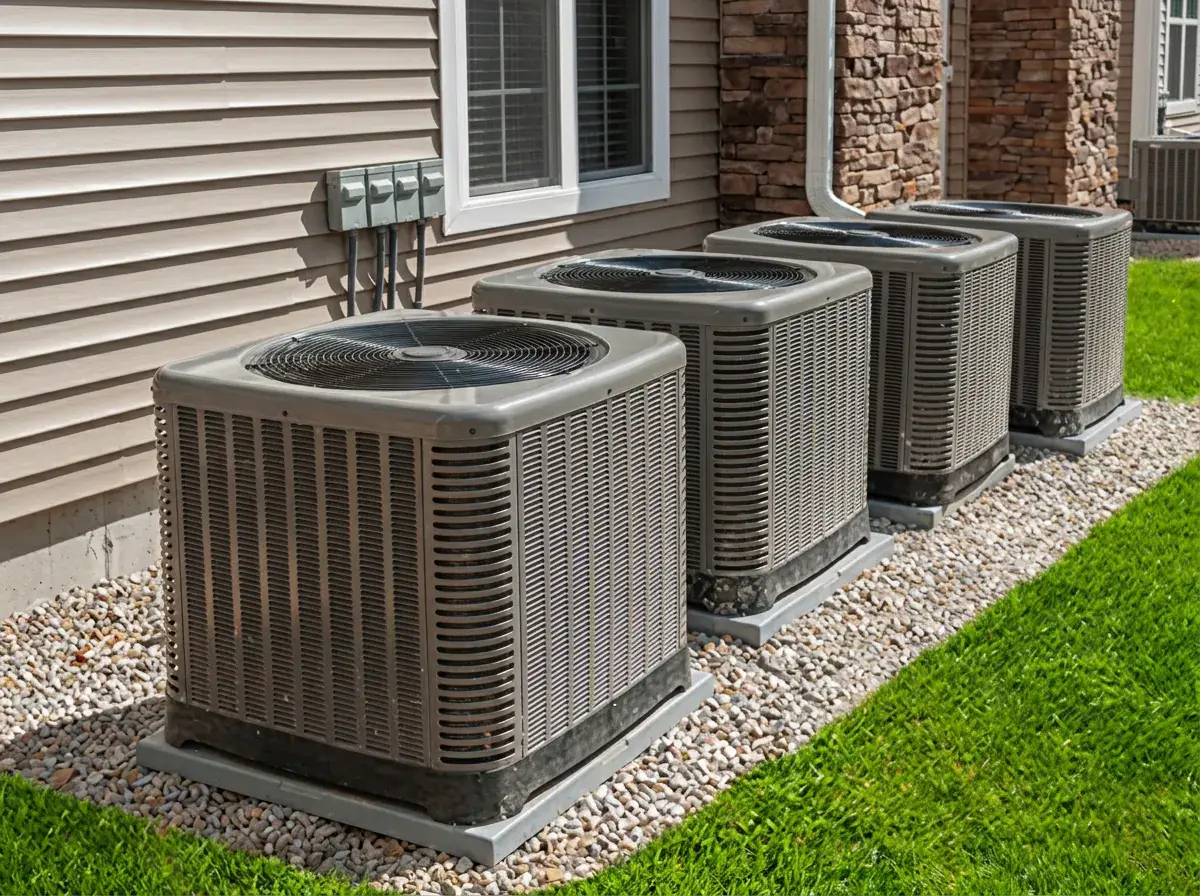
- $150–350 Consumers Energy 2026 rebates: central air at $150 or $300, ductless at $350 Consumers Energy 2026
- 26.7% of county housing predates 1940 — much of it with no ductwork at all US Census ACS B25034
- 6,131 Hillsdale city households on municipal electricity, so no Consumers rebate MPSC service-territory data
What Installing Air Conditioning Involves
Central air conditioning is two pieces of equipment joined by refrigerant lines: a condenser outside, and a coil sitting on top of the furnace indoors that the existing blower pushes air across. If the house already has ductwork and a furnace, most of the system is already there.
The steps
- Manual J load calculation. Square footage alone is not a sizing method, and oversizing is the usual error.
- Checking the blower and the ducts can carry the airflow the coil needs. This is where the job most often grows.
- Setting the condenser on a level pad with clearance around it.
- Running the line set and the condensate drain, with somewhere for the water to go.
- Electrical: a disconnect and a correctly sized circuit.
- Commissioning — verifying the refrigerant charge and measuring the temperature split rather than assuming it.
Why oversizing is the mistake to avoid
An oversized system cools the air quickly, satisfies the thermostat and shuts off before it has removed much moisture. The result is a house that is cold and clammy rather than comfortable, and equipment that short-cycles its way to an early failure. Correct size beats large size, every time.
Central or Ductless Depends on the House
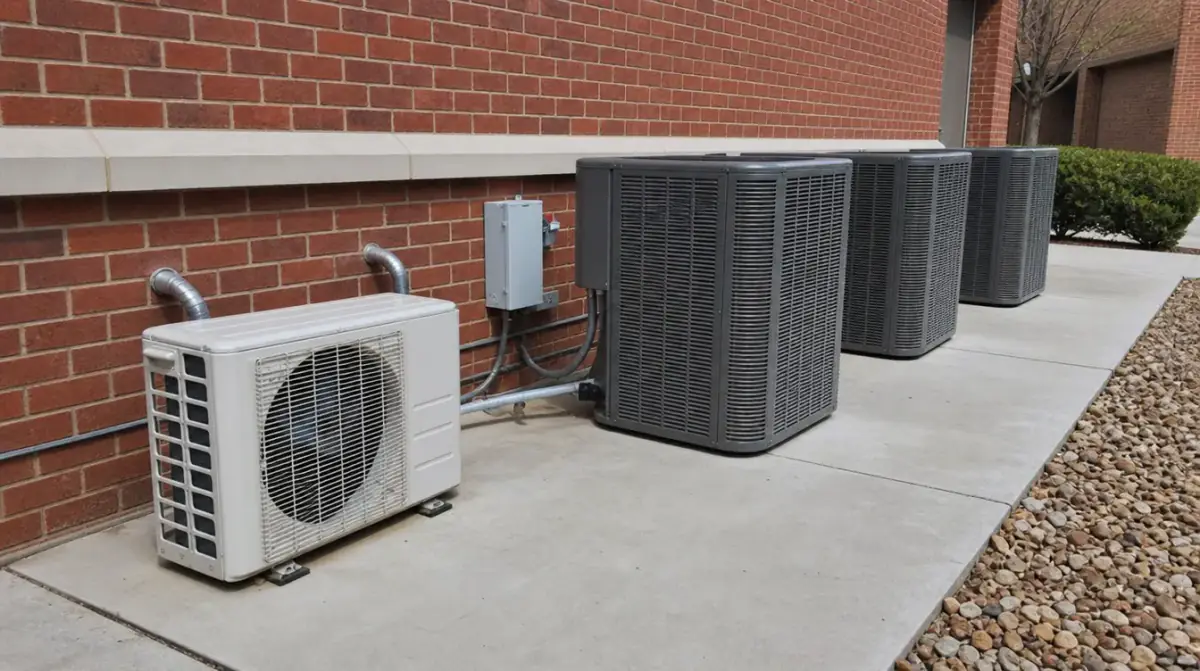
Central air needs somewhere to put the ducts. Where a house already has a furnace and a duct system that can carry the airflow, central is usually the cheaper and quieter answer, because most of the system is already installed and the coil simply sits on top of the furnace. Where it does not, the choice is between building a duct system and going ductless — and that question comes up here more than in most markets, because a quarter of the local housing stock predates 1940 and was never designed around ducts at all.
So the branch point is simple, and it comes first:
- Usable ductwork already there. Central air is normally the straightforward answer — provided the ducts can actually carry the air, which in retrofitted systems is worth verifying rather than assuming. See ductwork.
- No ductwork, or ductwork that cannot cope. Ductless. DOE and PNNL Building America guidance puts its fit as houses on electric resistance, wall units or baseboard heat, needing no ductwork and working as a retrofit rather than a renovation. See ductless mini-splits.
Installing a full duct network into a pre-war house purely to add cooling is the expensive answer, and Consumers pays more toward ductless ($350) than toward central air at its lower tier ($150), which narrows the gap further.
Size It for Humidity, Not Just Temperature
The failure mode worth designing against is oversizing. A unit with more capacity than the house needs drops the air temperature to the setpoint quickly and shuts off. Because the cycles are short, it never removes much moisture, and you get a house that is cold and clammy rather than comfortable — then people set the thermostat lower, which makes it worse.
Building America guidance names this directly for ductless systems: correct sizing per zone is imperative, or you get short-cycling and poor humidity control. The same principle governs central equipment. The method is ACCA Manual J for the load and Manual S for selection, and it is a fair question to ask what a quote was calculated from.
AC Installation Rebates in Hillsdale County, MI
| Consumers Energy 2026 measure | Amount |
|---|---|
| Central air conditioning | $150 / $300 |
| Ductless mini-split | $350 |
| Air-source heat pump, 15.2+ SEER2 | $300 |
| Ground-source | $200 / $300 |
| Smart thermostat | $50 / $100 |
| AC tune-up (1 Apr – 30 Sep only) | $65 |
All of these are for Consumers electric customers
Inside the City of Hillsdale, electricity comes from the municipal Board of Public Utilities — 6,131 customers — so those addresses are not Consumers electric customers and go through Efficiency Smart instead. Outside the city limits it is Consumers. And DTE serves none of this county, so any DTE rebate advertised here is wrong.
Nothing federal applies: 25C covers only property placed in service before 31 December 2025, and 25D is likewise unavailable after that date, per the IRS. We publish no AC installation price because we have no sourced figure — see what things cost for what we do publish and why.
Air conditioner installation by Town
We cover air conditioner installation in every town and township in the county.
- Air conditioner installation in Hillsdale, MI 49242
- Air conditioner installation in Jonesville, MI 49250
- Air conditioner installation in Litchfield, MI 49252
- Air conditioner installation in Reading, MI 49274
- Air conditioner installation in Pittsford, MI 49271
- Air conditioner installation in Waldron, MI 49288
- Air conditioner installation in Camden, MI 49232
- Air conditioner installation in North Adams, MI 49262
- Air conditioner installation in Allen, MI 49227
- Air conditioner installation in Jerome, MI 49249
- Air conditioner installation in Osseo, MI 49266
AC Installation FAQ
What rebate can I get on a new air conditioner in Hillsdale County?
Consumers Energy’s 2026 residential measures pay its electric customers $150 or $300 toward central air conditioning, $350 toward a ductless mini-split, $300 toward an air-source heat pump at 15.2+ SEER2, and $200 or $300 toward ground-source. The qualifier matters here: homes inside the City of Hillsdale buy electricity from the municipal Board of Public Utilities, not Consumers, so they go through Efficiency Smart instead. Outside the city limits, Consumers is the supplier and the measures apply. No federal credit is available — 25C covers only property placed in service before 31 December 2025.
Should I get central air or a ductless system?
It depends on whether the house has ductwork that can carry cold air, which in this county is a live question rather than an assumption. 26.7 percent of Hillsdale County housing was built in 1939 or earlier, and a great deal of the stock heats hydronically with radiators, which cannot deliver cooling at all. Where there are no usable ducts, a ductless system avoids installing a full duct network into a building never designed for one — and Consumers pays more toward ductless ($350) than toward central air at the lower tier ($150).
Does an air conditioner need to be sized differently in Michigan?
It needs to be sized to the house, which is not the same as sized to the region. The failure that matters is oversizing: a unit that cools the air quickly and shuts off never runs long enough to remove moisture, so the house ends up cold and clammy. Building America guidance flags exactly this for ductless equipment — short-cycling and poor humidity control — and the principle is the same for central systems. ACCA Manual J for the load, Manual S for the equipment.
Can I add air conditioning to a house with a boiler?
Yes, but not through the radiators. Hydronic systems cannot carry cold air, so the options are a separate duct system, a ductless system, or window units. In the pre-1940 stock that makes up better than a quarter of this county’s housing, installing ducts purely to add cooling is usually the expensive answer — Department of Energy and PNNL Building America guidance puts ductless as the fit for houses with no ductwork, working as a retrofit rather than a renovation.
When is the best time to have air conditioning installed?
Spring, and there is a rebate reason as well as a comfort one. The Consumers AC tune-up rebate of $65 is only claimable between 1 April and 30 September, so the maintenance side of the season has a hard window on both ends. Installing before the hot weather also means the system gets commissioned and checked when a fault is an inconvenience rather than an emergency.
Ask About Air Conditioning
Tell us what heats the house now and whether there is existing ductwork. If the answer is radiators or baseboard, the conversation changes completely.
There is no phone number published on this site yet, so requests come in through this form — we reply by email or call you back on the number you give. That is also why the phone field is required rather than optional.
Where these numbers come from
Housing age: US Census American Community Survey table B25034. Ductless suitability and the sizing/humidity guidance: US Department of Energy and PNNL Building America. Sizing standards: ACCA Manual J and Manual S. Rebate amounts and conditions: Consumers Energy 2026 programme documentation. Utility territories and the Hillsdale BPU customer count: Michigan Public Service Commission. Federal credits: IRS. No installed price for air conditioning is published because we have no sourced figure, local or statewide.