
Service · Hillsdale, MI
Duct Cleaning in Hillsdale, MI
Often the real fault the furnace gets blamed for
In Hillsdale, MI and across the county: repair, sealing and the returns nobody sized — in a housing stock that mostly got its ducts as an afterthought.
In Hillsdale County, Michigan, 26.7 percent of houses were built in 1939 or earlier. Almost none of them were designed around ductwork, which is why the duct system is so often the fault the furnace gets blamed for.
Request service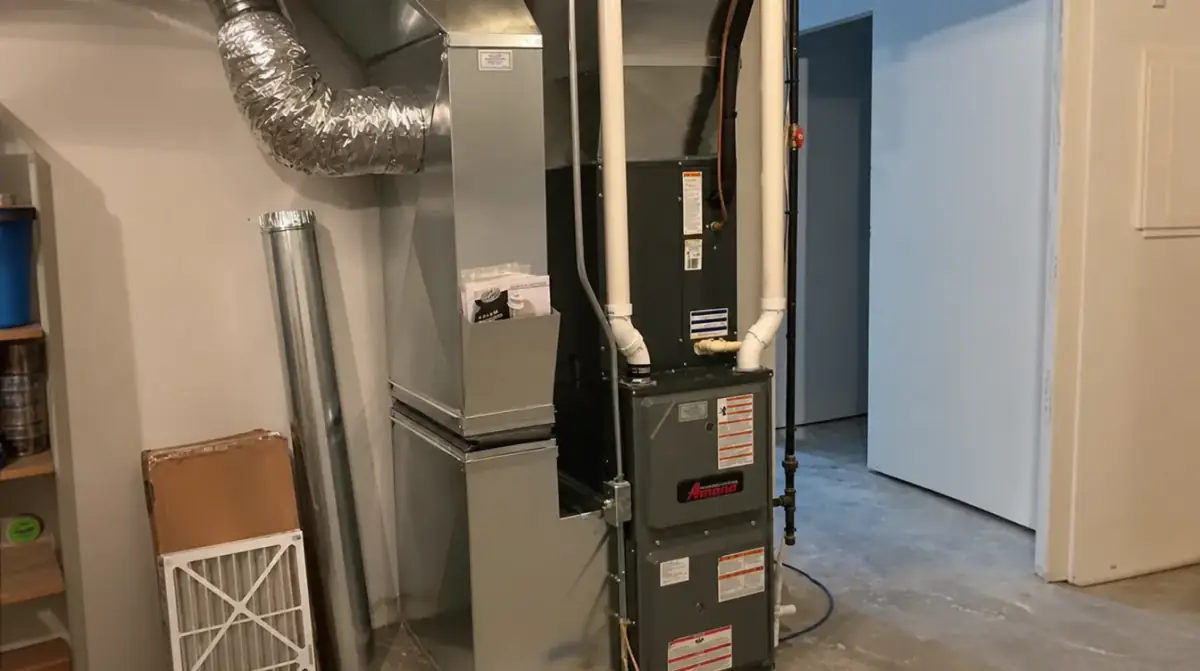
- 5,735 houses in the county built in 1939 or earlier — ducts added later, if at all US Census ACS B25034
- 26.7% of the stock, against 14.5% for Michigan as a whole US Census ACS B25034
- Near-total gap: almost none of the competing HVAC sites serving this county cover ductwork Our audit, August 2026
Why Duct Systems Fail in This Housing Stock
Nearly every duct problem traces back to the same thing: the ducts were added to a house that was not designed to have them. Buildings from the gravity-heat and boiler era had no chases, no return paths and no plenum space, so the ducts went wherever there was room to put them. That describes most of the older housing in this county.
That produces a specific and repeatable set of problems:
- Runs that are too long, because the equipment ended up wherever there was room rather than where the house wanted it.
- Undersized returns, or a single central return doing the work of several. Air that cannot get back does not circulate.
- Trunks threaded through spaces never meant to carry them, with the section area pinched at every awkward point.
- Runs through unconditioned space — crawl spaces, unheated basements, knee walls — where leakage costs real money.
- Additions tied in badly or not at all, heated by whatever was cheapest in the decade they were built.
A furnace can only move the air the duct system permits. Which is why, in this county more than most, replacing equipment without looking at the ducts is buying a more expensive version of the same complaint. See furnace replacement.
Symptoms That Are Usually Ducts, Not Equipment
- One room or one floor never comes up while the rest of the house is fine.
- The furnace cycles on its own limit switch — it is making heat faster than the ducts can carry it away.
- Strong airflow at one register, almost none at another on the same run.
- The blower is loud or the system whistles at the registers, which is air being forced through too little section.
- Dust that returns immediately after cleaning, which can mean unsealed returns pulling from a crawl space.
None of these are proof on their own. All of them are worth mentioning before someone quotes you a furnace.
Repair, Sealing and Cleaning Are Three Different Jobs
Repair and modification
Reconnecting sections that have come apart, replacing crushed runs, adding or enlarging returns, resizing a trunk that was undersized when it was fitted. This is the work that changes how the system performs. In Michigan it is its own licence classification — ductwork is listed separately from HVAC equipment under LARA's Bureau of Construction Codes.
Sealing
Closing the leaks, and the ones worth closing first are in unconditioned space, because that is where the escaping air is genuinely lost rather than just misdirected. We are not publishing a percentage saving for this — no sourced figure exists for duct leakage in this housing stock, and inventing one would be exactly the kind of claim this site avoids.
Cleaning
Removing what has built up inside the runs. Worth doing after construction or renovation, or after a specific contamination event. It is not a fix for a duct system that cannot carry the air, and a quote offering cleaning as the answer to cold rooms is answering a different question than the one you asked.
If the House Has No Ductwork
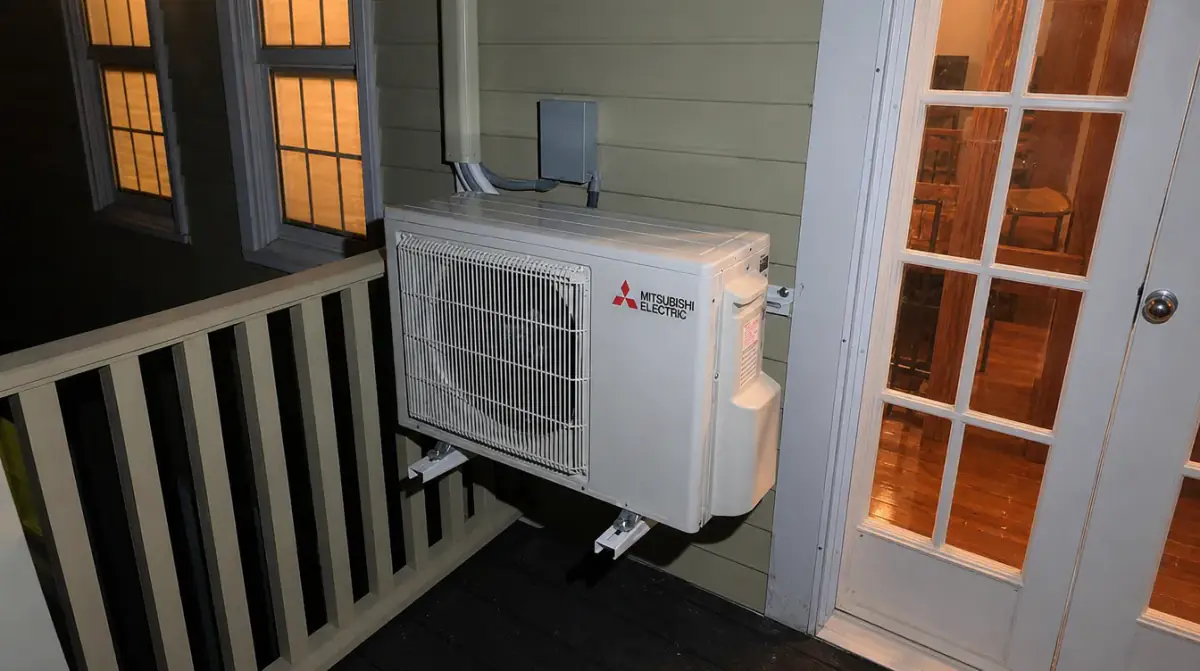
Common here — both in the pre-war stock and in the many houses that heat with a boiler and radiators. Installing a full duct system into a house that was never designed for one is the expensive answer and often the impractical one.
Department of Energy and PNNL Building America guidance puts ductless systems as the fit for homes on electric resistance, wall units or baseboard heat, needing no ductwork and working as a retrofit rather than a renovation — with the condition that sizing per zone by ACCA Manual J is imperative, or the heads short-cycle and control humidity poorly. See ductless mini-splits and boiler repair.
Ductwork repair and sealing by Town
We cover ductwork repair and sealing in every town and township in the county.
- Ductwork repair and sealing in Hillsdale, MI 49242
- Ductwork repair and sealing in Jonesville, MI 49250
- Ductwork repair and sealing in Litchfield, MI 49252
- Ductwork repair and sealing in Reading, MI 49274
- Ductwork repair and sealing in Pittsford, MI 49271
- Ductwork repair and sealing in Waldron, MI 49288
- Ductwork repair and sealing in Camden, MI 49232
- Ductwork repair and sealing in North Adams, MI 49262
- Ductwork repair and sealing in Allen, MI 49227
- Ductwork repair and sealing in Jerome, MI 49249
- Ductwork repair and sealing in Osseo, MI 49266
Ductwork FAQ
Why does ductwork matter so much in Hillsdale County?
Because of the age of the housing. 5,735 of the county’s 21,490 housing units — 26.7 percent — were built in 1939 or earlier, against 14.5 percent for Michigan as a whole, per US Census ACS table B25034. Ducts in that stock were almost always added later, threaded through spaces the building was never designed to give up: long runs, undersized returns, trunks squeezed through joist bays. A furnace can only move the air the duct system will let it move, so in a pre-war house the ducts are frequently the real constraint rather than the equipment.
My upstairs never warms up. Is that the furnace or the ducts?
Usually the ducts, and specifically the returns. A system that can push air into a room but cannot get it back out will not move much air through that room no matter how big the furnace is. The other common causes in this housing stock are runs that are simply too long, a trunk that was undersized when it was added, and disconnected or crushed sections in a crawl space nobody has looked at in thirty years. Replacing the furnace without fixing any of that buys a more expensive version of the same complaint.
Is duct sealing worth doing on an old house?
It is usually the highest-value ductwork job in this county, because leakage in unconditioned space is heat you paid for going somewhere you do not live. In a pre-1940 house the duct runs frequently pass through a crawl space, an unheated basement or a knee wall. What we are not going to do is publish a percentage saving, because we have no sourced figure for duct leakage in this housing stock and a made-up number would be exactly the kind of claim this site exists to avoid.
Do you clean ducts?
Cleaning and sealing are different jobs and get conflated in advertising. Cleaning removes what has accumulated inside the runs; sealing addresses air escaping from them. Cleaning is worth doing after construction or renovation work, or where there has been a specific contamination event. It is not a substitute for fixing a duct system that cannot carry the air, and any quote that offers cleaning as the answer to rooms that never warm is answering a different question.
What if my house has no ductwork at all?
That is common here, both in the pre-war stock and in houses that heat with a boiler and radiators — and it does not mean you have to install a duct system. Ductless mini-splits exist for this situation: Department of Energy and PNNL Building America guidance puts their best fit as homes on electric resistance, wall units or baseboard heat, needing no ductwork and so working as a retrofit rather than a renovation. Sizing has to be done per zone with ACCA Manual J, or the heads short-cycle.
Ask About Ductwork
Tell us which rooms misbehave and how — never warm, never cool, noisy, dusty — and roughly when the house was built. That usually narrows it before anyone visits.
There is no phone number published on this site yet, so requests come in through this form — we reply by email or call you back on the number you give. That is also why the phone field is required rather than optional.
Where these numbers come from
Housing age: US Census American Community Survey table B25034. Ductless suitability and the per-zone sizing requirement: US Department of Energy and PNNL Building America. Sizing standard: ACCA Manual J. Licence classifications, including ductwork as a classification distinct from HVAC equipment: LARA Bureau of Construction Codes. Competitor ductwork coverage: our own audit of five regional HVAC sites, August 2026. No ductwork price and no duct-leakage saving percentage is published on this page, because we have no sourced figure for either.