
Service · Hillsdale, MI
Ductless Mini Split in Hillsdale, MI
For the houses that were built before ducts were a thing
In Hillsdale, MI and across the county: heating and cooling for houses with no duct chase to work with, sized per zone rather than per room.
26.7 percent of housing in Hillsdale County, Michigan predates 1940. A great deal of it was built before ducts were a design consideration, which is exactly the situation ductless equipment exists for.
Request service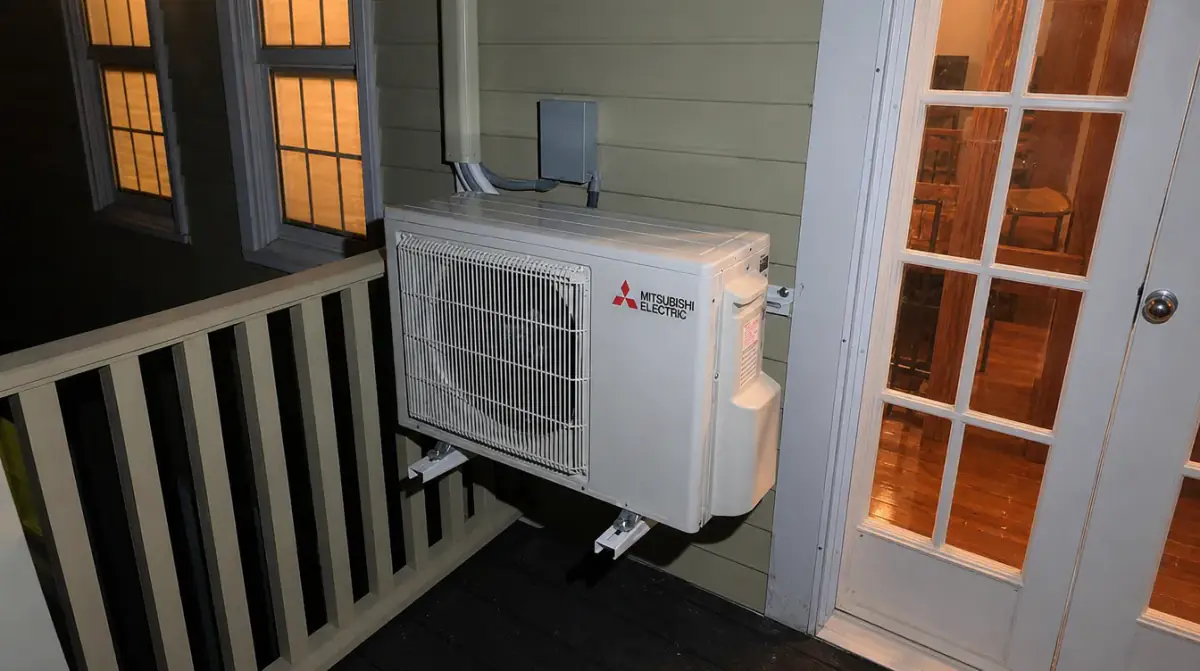
- −15°F is where some cold-climate models still operate, against a 17.5°F January mean minimum here DOE/PNNL Building America · NOAA
- 26.7% of county housing predates 1940 — the stock with no duct chase to work with US Census ACS B25034
- $350 Consumers Energy 2026 rebate for a ductless mini-split — for Consumers electric customers only Consumers Energy 2026
How a Ductless System Works
A ductless system is an outdoor compressor connected to one or more indoor heads by a refrigerant line set running through a three-inch hole in the wall. Each head conditions the room it is in and has its own thermostat, so rooms are controlled separately rather than from one central point. Nothing is ducted, which is why the install is a day's work rather than a renovation.
Single zone or multi zone
One outdoor unit can serve a single head or several. A multi-zone system is neater than several separate systems but ties the zones to one compressor, so the sizing has to account for what happens when only one head is calling.
What the installation involves
- A load calculation per zone, not per room — the two are not the same thing.
- Mounting the heads where the air will actually reach the space, which is not always where they look best.
- The line set and condensate route, run either inside the wall or in a cover outside.
- A dedicated electrical circuit to the outdoor unit.
- Commissioning — vacuum, charge and verify, rather than assume.
They also both heat and cool, which is the part people miss. A ductless system is not a summer purchase.
Where Ductless Actually Fits
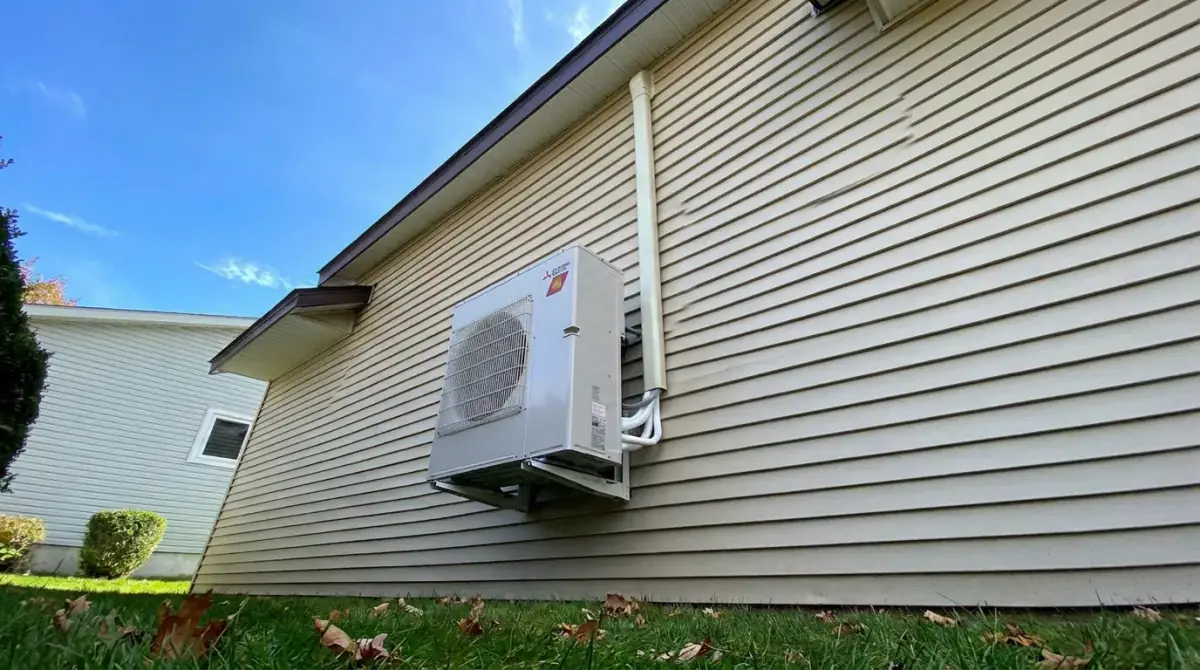
Ductless earns its place where running a duct is the hard part. That typically means a house on electric resistance, wall units or baseboard heat; an addition that was never properly tied into the heating system; a converted attic; or a single room the existing system has never reached. In each case the alternative is opening up walls and ceilings to find a chase that may not exist.
5,735 of the county's 21,490 housing units were built in 1939 or earlier (ACS B25034). In that stock, adding conditioning to a back bedroom, a converted attic, an addition that was never properly tied into the heating system, or a house on baseboard electric means either opening up walls and ceilings to find a chase, or not using ducts at all. Ductless is the second option.
It is also frequently the sensible way to add cooling to a house that heats with a boiler — and this county has plenty of those. Radiators cannot carry cold air, so the choice is a whole new duct system or a ductless one. See boiler repair.
The Cold-Climate Question, Answered Properly
Cold-climate performance is the question every ductless quote should answer, and most do not. Some models operate down to −15°F, per Department of Energy and PNNL Building America guidance — but a model's stated minimum is not the same thing as a design answer for a particular house.
Building America guidance notes that some models operate down to −15°F. Set that against a 17.5°F mean January minimum and the equipment is inside its range for most of the season. But a mean minimum is not the design condition — the design conversation is about the coldest stretches, and the honest version has three parts: which model, what happens at the bottom of the range, and what backup exists. Anyone who answers "yes, they work fine here" without touching those three has not had the conversation.
Sizing Per Zone Is Not Optional
This is the part Building America guidance is most emphatic about: correct sizing per zone is imperative, or you get short-cycling and poor humidity control. The method is ACCA Manual J per zone for the load and Manual S for equipment selection.
The failure mode is specific and common. An oversized head satisfies its thermostat quickly and stops, so it never runs long enough to pull moisture out of the air. The room ends up cold and clammy in summer, and the equipment cycles itself toward an early death. Because ductless systems are sold zone by zone, oversizing is easy to do by eye and hard to notice until the second summer.
Installing One in a Zone 5A Winter
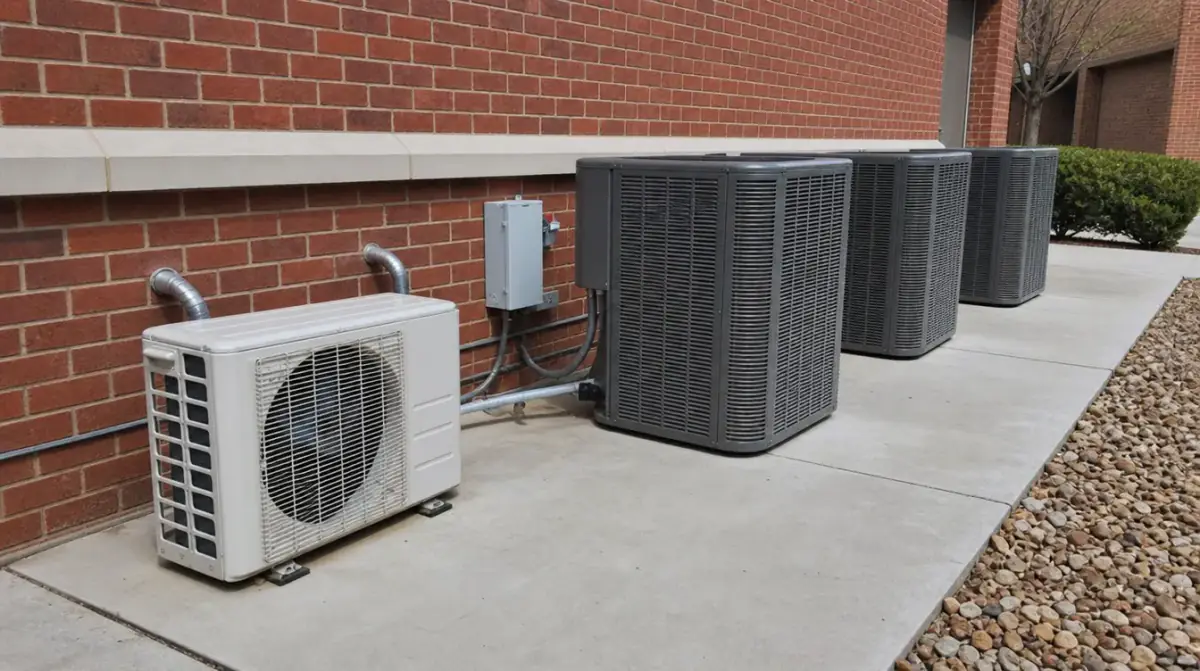
- Mount the outdoor unit on a pad above snow height. Building America says so and this county gives the advice teeth. A unit set at grade will spend February buried.
- Plan the condensate route so it does not freeze where it exits.
- Keep the unit clear through the winter — drifting and roof shed are the two that catch people.
- Budget for the maintenance: professional blower-wheel cleaning on the wall heads every one to three years, filter cleaning every two weeks between.
Ductless Rebates in Hillsdale County, MI
Consumers Energy's 2026 residential measures pay $350 for a ductless mini-split and $300 for an air-source heat pump at 15.2+ SEER2, to its electric customers. In this county that qualifier does real work:
| Where the house is | Electric supplier | Ductless rebate route |
|---|---|---|
| Inside the City of Hillsdale | Hillsdale BPU (municipal, 6,131 customers) | Efficiency Smart, not Consumers |
| Rural county, outside the city | Consumers Energy | $350 Consumers ductless measure |
The rule that catches propane households
MiPropane's $250 per unit cannot be claimed on equipment paired with a heat pump. A mini-split installed alongside a new propane furnace forfeits that rebate. If you are planning both, work out which one is worth more before you order anything — and see propane furnaces.
Nothing federal applies: 25C covers only property placed in service before 31 December 2025, and 25D is likewise unavailable after that date, per the IRS.
Ductless mini-split installation by Town
We cover ductless mini-split installation in every town and township in the county.
- Ductless mini-split installation in Hillsdale, MI 49242
- Ductless mini-split installation in Jonesville, MI 49250
- Ductless mini-split installation in Litchfield, MI 49252
- Ductless mini-split installation in Reading, MI 49274
- Ductless mini-split installation in Pittsford, MI 49271
- Ductless mini-split installation in Waldron, MI 49288
- Ductless mini-split installation in Camden, MI 49232
- Ductless mini-split installation in North Adams, MI 49262
- Ductless mini-split installation in Allen, MI 49227
- Ductless mini-split installation in Jerome, MI 49249
- Ductless mini-split installation in Osseo, MI 49266
Ductless Mini-Split FAQ
Do ductless mini-splits work in a Hillsdale County winter?
Some models operate down to −15°F, per Department of Energy and PNNL Building America guidance, and Hillsdale County sits in IECC climate zone 5A, "Cold". The January mean minimum on the NOAA 1991–2020 normals for the nearest long-record station is 17.5°F, so a cold-climate unit is working within its range for most of the season — but the design question is what happens in the tail, not at the average. That is a sizing and backup conversation, not a yes or no, and it is why the equipment selection matters more here than it would further south.
Why are mini-splits a good fit for old houses in this county?
Because 26.7 percent of Hillsdale County housing was built in 1939 or earlier, against 14.5 percent statewide, per ACS table B25034 — and a pre-war house frequently has nowhere sensible to run a duct. DOE and PNNL Building America guidance is that ductless systems suit homes on electric resistance, wall units or baseboard heat and need no ductwork, which makes them a retrofit answer rather than a renovation. In practice that means adding heat or cooling to a room without opening up a house that was not built for ducts.
How many indoor heads do I need?
That is decided by a room-by-room load calculation, not by counting rooms. Building America guidance is explicit that correct sizing per zone is imperative — an oversized head short-cycles, which gives poor humidity control and uneven comfort, and it is the most common way a ductless install disappoints. The method is ACCA Manual J per zone for the load and Manual S for equipment selection. If a quote arrives with a head count and no calculation behind it, ask what the load numbers were.
Is there a rebate for a ductless mini-split in Hillsdale County?
Consumers Energy pays $350 for a ductless mini-split under its 2026 residential measures — but only to its own electric customers. That is the catch here: homes inside the City of Hillsdale buy electricity from the Hillsdale Board of Public Utilities, a municipal utility with 6,131 customers, so they are not Consumers electric customers and go through Efficiency Smart instead. Rural addresses outside the city generally are Consumers customers and can claim. And note that MiPropane explicitly excludes equipment paired with a heat pump, so a mini-split alongside a propane furnace forfeits the $250 propane rebate.
What maintenance does a mini-split need?
More than people expect, and skipping it is what shortens their life. Building America guidance is that the wall heads need professional blower-wheel cleaning every one to three years, with filter cleaning every two weeks in between. The outdoor unit should be mounted on a pad above snow height — which in zone 5A is not a formality — and kept clear through the winter.
Ask About a Ductless System
Tell us which rooms you are trying to reach, what heats them now, and roughly when the house was built. Those decide whether ductless is the right answer or just the easiest one to sell.
There is no phone number published on this site yet, so requests come in through this form — we reply by email or call you back on the number you give. That is also why the phone field is required rather than optional.
Where these numbers come from
Ductless suitability, sizing method, the −15°F operating figure, the pad-above-snow-height guidance and the blower-wheel and filter cleaning intervals: US Department of Energy and PNNL Building America. Climate zone: DOE Building America. Degree days and January mean minimum: NOAA 1991–2020 Climate Normals, Jackson Reynolds Field (KJXN). Housing age: US Census ACS B25034. Utility territories and the Hillsdale BPU customer count: Michigan Public Service Commission. Rebate amounts: Consumers Energy 2026 programme documentation and mipropanerebates.com. Federal credits: IRS. Sizing standards: ACCA Manual J and Manual S. No installed price is published here because we have no sourced figure for ductless equipment, local or statewide.